
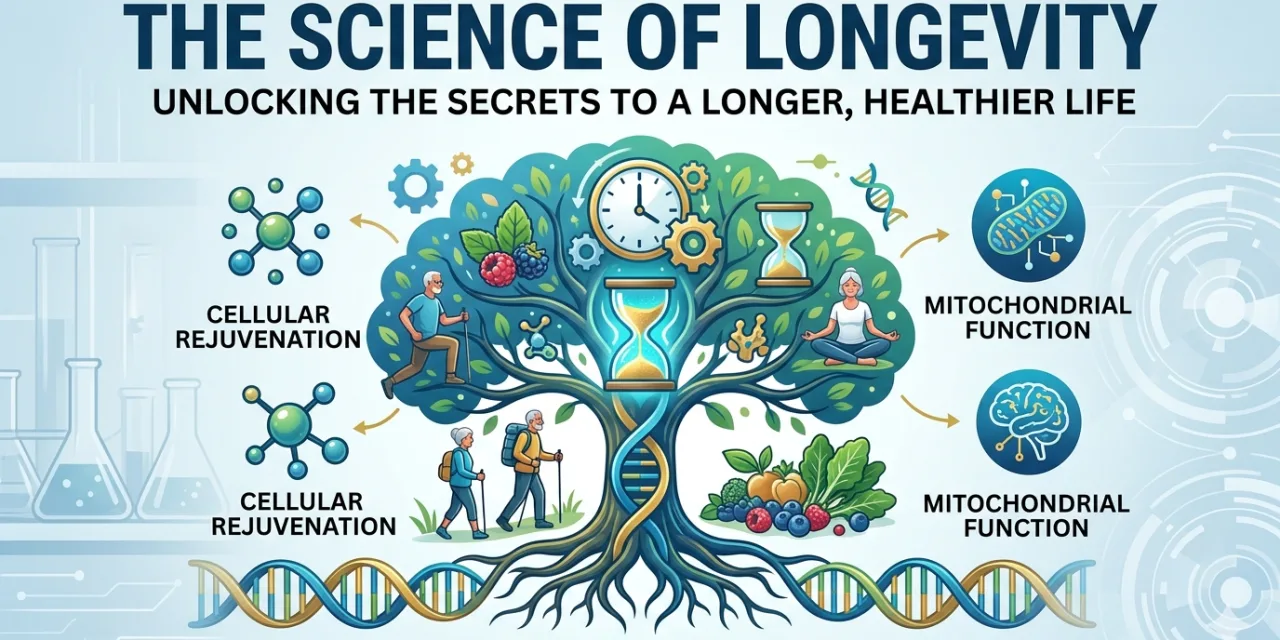
At the turn of the 20th century, the average life expectancy in the United States was 47 years. By 2024, it had reached 79 — a near-doubling in a single century driven by vaccines, antibiotics, sanitation, and the systematic elimination of diseases that previously killed people in middle age. The question that longevity science is now asking is whether the process that produced this increase has reached its natural limit, or whether there is a second wave of life extension available through the deliberate targeting of the biological mechanisms of aging itself. And the answer, as of 2026, is that scientists increasingly believe the limit has not been reached — that aging, which was long treated as an inevitable biological fact, is beginning to be understood as a biological process that can be modulated, slowed, and potentially partially reversed.
The number of active aging-focused clinical trials globally surpassed 120 by early 2026, a threefold increase from 2020 levels. Life Biosciences announced it will begin human trials in 2026 of a cellular reprogramming therapy designed to rejuvenate cells without altering their core identity. A 2025 study from Scripps Research and Gero used AI to screen thousands of compounds, identifying several that meaningfully extend lifespan in model organisms — over 70 percent of their top hits increased lifespan in worms. Dr. Andrea Maier, founding president of the Healthy Longevity Medicine Society, stated at the 2025 Longevity Investors Conference in Gstaad: “Healthy longevity medicine is not science fiction anymore. We understand why we age. We understand, especially through life interventions, how to intervene.”
Whether humans can actually live to 150 depends on two separate questions that are often conflated: whether 150 represents a plausible biological ceiling for the human lifespan, and whether the interventions being developed can push most people to that ceiling rather than only the most genetically fortunate. This guide covers the science of both questions — the biology of aging, the therapies currently in clinical development, what the most credible researchers say about realistic timelines, what is currently available to individuals today, and the honest assessment of where optimism is warranted and where it is not.
Why We Age: The Twelve Hallmarks
The 2023 updated landmark paper in Cell identified twelve hallmarks of aging — the fundamental biological processes that collectively produce the deterioration of function that we experience as growing old. Understanding them is the prerequisite for understanding what longevity interventions are targeting and why.
The twelve hallmarks include genomic instability (accumulated DNA damage from environmental exposures, replication errors, and failed repairs), telomere attrition (the shortening of protective chromosome end-caps with each cell division), epigenetic alterations (changes in gene expression patterns that accumulate with age and dysregulate cellular function), loss of proteostasis (the failure of cellular protein quality control systems that leads to protein misfolding and aggregation), disabled macroautophagy (impaired cellular cleanup processes), deregulated nutrient-sensing (dysregulation of the pathways that translate nutrient availability into cellular behaviour, particularly the mTOR, AMPK, and insulin/IGF-1 signalling pathways), mitochondrial dysfunction (declining efficiency of cellular energy production), cellular senescence (the accumulation of damaged cells that have stopped dividing but resist death and secrete inflammatory signals that damage surrounding tissue), stem cell exhaustion (declining regenerative capacity as stem cell pools deplete), altered intercellular communication (systemic changes in inflammatory signalling and hormonal environment), chronic inflammation (the persistent low-grade inflammation that accelerates age-related disease), and dysbiosis (changes in the gut microbiome composition associated with aging and disease).
The critical insight from the twelve hallmarks framework is captured by the 2025 longevity research synthesis: aging is not driven by a single biological mechanism. Targeting multiple hallmarks simultaneously — combination approaches analogous to how oncology uses combination chemotherapy — produces better outcomes than any single-mechanism intervention. This shifts longevity science away from the search for a single “aging gene” or single drug that conquers aging, toward a more complex model in which multiple interventions targeting different hallmarks work synergistically. The most productive longevity research programmes in 2026 are those organised around this multi-hallmark combination framework.
Senolytics: Clearing the Zombie Cells
Senescent cells — sometimes called “zombie cells” — are cells that have stopped dividing in response to damage or stress, are resistant to the normal cell death (apoptosis) that would clear them, and secrete a cocktail of inflammatory proteins called the senescence-associated secretory phenotype (SASP) that damages surrounding tissue and accelerates aging in nearby cells. The accumulation of senescent cells with age is one of the most robustly demonstrated hallmarks — senescent cell burden increases throughout the lifespan, and clearing them in mouse models extends both healthspan and lifespan with remarkable consistency.
Senolytics are drugs that specifically target and eliminate senescent cells. The most studied combination is dasatinib plus quercetin (D+Q) — dasatinib is a cancer drug and quercetin is a flavonoid found in many foods, and together they have been shown in multiple studies to selectively kill senescent cells. The dasatinib plus quercetin combination had been evaluated in over 15 clinical trials by early 2026, addressing indications including idiopathic pulmonary fibrosis, diabetic kidney disease, Alzheimer’s disease, and frailty. Results in human trials have been more variable than in mouse models — a consistent theme in longevity biology, where rodent results frequently outperform human results — but the early human data show reductions in senescent cell markers in accessible tissues including skin and blood, with some studies showing associated improvements in physical function.
The caveat that clinical development has surfaced is concerning: senolytics have shown off-target effects in human trials. Navitoclax, a potent senolytic, causes dose-limiting reductions in platelet counts because platelets share with senescent cells the survival pathway that navitoclax inhibits. Patient-to-patient variation in response is substantial, partly because senescent cell burden and composition vary significantly between individuals of the same chronological age. The field is working on more targeted senolytic approaches — nanoparticle delivery systems that concentrate the senolytic specifically in senescent cells, and next-generation compounds with improved selectivity — but these refinements are in earlier development stages than the first-generation D+Q combination.
Rapamycin and mTOR Inhibition: The Most Reproducible Longevity Drug
Rapamycin — an immunosuppressant originally used to prevent organ transplant rejection — is the single compound with the most consistent evidence for extending lifespan across multiple species. In mice, rapamycin reliably extends maximum lifespan by 10 to 15 percent, and this result has been reproduced in multiple independent laboratories using different mouse strains and different dosing regimens. It extends lifespan even when started in middle-aged mice — approximately equivalent to starting treatment at 60 in humans — a finding with direct implications for potential human applicability.
Rapamycin works by inhibiting mTORC1 — a central cellular signalling hub that integrates nutrient availability, growth factor signals, and cellular stress to regulate protein synthesis, autophagy (cellular cleanup), and cell growth. When mTORC1 is inhibited, cells shift from a growth-and-proliferation mode to a maintenance-and-repair mode, which appears to reduce the cellular damage accumulation that drives aging. The mechanism overlaps with the longevity effects of caloric restriction — one of the most reproducible lifespan extension interventions across organisms — suggesting that mTOR inhibition captures part of what makes caloric restriction work without requiring actual food deprivation.
Human clinical data on rapamycin for longevity is limited but accumulating. The PEARL trial, completed in 2024, examined intermittent low-dose rapamycin in healthy older adults and found improvements in immune function and physical performance measures, along with reductions in biomarkers associated with cellular senescence. The Dog Aging Project — a rigorous clinical trial in pet dogs, whose lifespan, genetics, and disease spectrum make them valuable human-analogous models — is examining rapamycin’s effects on canine aging with results expected to inform human trial design. Physicians in the longevity medicine community are beginning to prescribe rapamycin off-label for healthy aging, with the Mayo Clinic’s James Kirkland and other respected researchers expressing cautious support for this approach while emphasising that definitive human longevity data does not yet exist.
Epigenetic Reprogramming: Turning Back the Clock
The most scientifically extraordinary longevity research area — and the one with the most dramatic animal results and the most uncertain human translation — is partial cellular reprogramming. The discovery that four transcription factors (Oct4, Sox2, Klf4, and c-Myc — the Yamanaka factors) can reset adult cells to a pluripotent stem cell-like state won the 2012 Nobel Prize in Physiology or Medicine. More recent research has found that exposing cells to these factors briefly — rather than the full duration that produces complete pluripotency — reverses epigenetic aging marks without erasing cell identity.
In 2023, a landmark study demonstrated that partial reprogramming reversed age-related vision loss in mice by resetting the epigenetic state of retinal ganglion cells. Studies in aged mice showed improvements in muscle regeneration, cognitive function, and overall healthspan from partial reprogramming approaches. The 2025 result that attracted the most attention came from trials showing that partial cellular reprogramming could not only slow but measurably reverse biological aging markers in both cells and live animals. Life Biosciences, co-founded by prominent aging researcher David Sinclair, announced plans to begin human trials of a cellular reprogramming therapy in 2026 — explicitly targeting age-related diseases including Alzheimer’s and diabetes through cellular rejuvenation rather than just symptom management.
The safety concerns around reprogramming are significant and warrant honest articulation. The Yamanaka factors include c-Myc, an oncogene whose overexpression causes cancer. Full reprogramming produces teratomas — tumours of mixed tissue type — in vivo. Even partial reprogramming, if insufficiently controlled, risks dedifferentiation toward cancer-like states. The human trials being initiated in 2026 will use more refined delivery systems (AAV vectors with tissue-specific promoters, inducible expression systems that can be turned off) and more carefully selected Yamanaka factor combinations (some research uses only three factors, omitting c-Myc) — but the safety profile of partial reprogramming in humans is genuinely unknown until the trial data emerges.
GLP-1 Agonists: The Unexpected Longevity Drug
The GLP-1 receptor agonists — semaglutide (Ozempic, Wegovy) and tirzepatide (Mounjaro) — emerged into public consciousness primarily as weight-loss medications. Their implications for longevity science extend significantly beyond weight management. SELECT trial data published in 2023 showed that semaglutide reduced major cardiovascular events by 20 percent in obese patients without diabetes — a magnitude of cardiovascular benefit that rivals the effects of statins and beta-blockers. 2025 data extended these findings to reductions in kidney disease progression, in sleep apnea severity, and in preliminary signals of reduced Alzheimer’s risk.
The longevity research community is examining GLP-1 agonists as potential multi-hallmark longevity drugs — agents that simultaneously reduce the metabolic dysfunction, chronic inflammation, cardiovascular disease risk, and obesity-associated disease burden that collectively represent major contributors to age-related mortality. The 2026 combination therapy framework — GLP-1 agonists combined with SGLT2 inhibitors and rapalogs — represents the most clinically tractable combination approach to longevity that can be assembled from already-approved drugs. This “polypharmacy longevity stack” approach, while not yet specifically validated in prospective longevity trials, represents the most near-term pathway for individuals who want evidence-based pharmacological support for healthy aging without waiting for purpose-built longevity drugs to complete trials.
What the Biological Limits Actually Are
The question of whether 150 is biologically possible for humans requires separating two related but distinct questions: what is the theoretical maximum lifespan that human biology permits, and what are the practical prospects for reaching that maximum given current and foreseeable interventions.
On the theoretical question, researchers from across the longevity science spectrum give similar answers. Dr. Evelyne Bischof, an internal medicine physician and longevity specialist, told Fortune that those under 50 today can “likely expect to live up to 100” given current trends, with further extensions possible as therapies develop. Dr. Andrea Maier’s assessment at the 2025 Gstaad conference placed a practical limit around 120 to 150 for biologically-optimal humans. A geneticist interviewed by Fox News in February 2026 described 150 as within the range of what is theoretically consistent with known human biology.
The existing record for verified human lifespan is Jeanne Calment, who died in 1997 at the verified age of 122 years, 164 days. This upper bound has not been exceeded in recorded human history despite the enormous increase in the number of people living past 100. The data on supercentenarians — people over 110 — suggests that mortality risk does not continue increasing with age above approximately 105, settling into a plateau that implies a statistical maximum rather than a hard biological ceiling. This plateau is consistent with theoretical upper bounds in the 120 to 150 range that researchers frequently cite.
The honest assessment: reaching 150 requires interventions that do not yet exist in human-validated form. Reaching 120 — matching the verified human maximum — likely requires several of the interventions in current trials to succeed and be deployed at scale. Reaching 100 in good health — extending healthspan rather than merely lifespan — is plausibly achievable for many people alive today through the combination of lifestyle interventions with demonstrated effects (regular exercise, appropriate caloric intake, sleep quality, stress management, social connection) and emerging pharmacological support as clinical evidence develops.
What Is Available Today: The Realistic Longevity Stack
The honest individual longevity guide in 2026 separates the interventions with strong evidence from those that are promising but unproven, and the unproven from the actively misleading.
The interventions with the strongest evidence base for extending healthy lifespan are all non-pharmacological and free or low-cost: regular aerobic and resistance exercise (the single most robustly demonstrated healthspan intervention, with effects on cardiovascular disease, cancer, cognitive decline, and metabolic function exceeding any pharmaceutical), adequate sleep duration and quality, caloric appropriateness without severe restriction, a diet pattern emphasising minimally processed foods, avoidance of smoking, moderation of alcohol, management of chronic psychological stress, and strong social relationships. These interventions collectively produce meaningfully different aging trajectories in population data, and none requires novel biotechnology to access.
Among medications, metformin (the diabetes drug with substantial epidemiological evidence for reduced cancer and cardiovascular disease risk in diabetic patients, and currently being evaluated in the TAME trial specifically for longevity effects in non-diabetics) and low-dose aspirin (with complex benefit-risk profiles depending on individual cardiovascular risk) are the candidates most often discussed as near-term pharmacological longevity support. The TAME (Targeting Aging with Metformin) trial is the first FDA-approved clinical trial to use longevity itself as its primary endpoint — a regulatory milestone that, if successful, would formally establish that aging is a treatable indication and open the regulatory pathway for purpose-built longevity drugs.
Rapamycin’s off-label use is growing among longevity-oriented physicians, with protocols typically involving intermittent dosing (once weekly) at low doses to reduce immunosuppressive effects while preserving the mTOR inhibition associated with lifespan extension in animal models. This is not yet validated in prospective human longevity trials. Any individual considering off-label rapamycin should do so only under the supervision of a physician familiar with its effects and the monitoring required to detect side effects early.
The supplements and interventions marketed most aggressively to the longevity market — nicotinamide riboside (NR) and NMN for NAD+ precursor supplementation, resveratrol, various peptides, hormone replacement beyond medically indicated doses — have significantly weaker evidence bases than their marketing suggests. Some have genuine if modest effects in specific populations for specific endpoints; most are oversold relative to their current evidence. The longevity consumer market in 2026 is characterised by the same gap between marketing and evidence that characterises every consumer health category where public enthusiasm outpaces scientific validation.
The Societal Implications: What Longer Lives Mean
If longevity science succeeds — if people routinely live to 100 in good health, and eventually to 120 or beyond — the societal implications are profound and largely unplanned for. Retirement systems designed around 65-year retirement ages with 15 to 20 years of expected retirement become structurally unsustainable when retirement spans 40 to 60 years. Career structures designed around a single-decade arc of professional peak performance require reconceptualisation when people have multiple decades of high-function working life. Healthcare systems designed to manage chronic disease at the end of life face a different challenge when the goal is preventing chronic disease from occurring at all through the lifespan.
The UN projects that the number of individuals aged 65 and over will double from 761 million in 2021 to 1.6 billion in the next two to three decades — a demographic transition that is already occurring from existing longevity gains before any anti-aging therapies have meaningfully contributed. The economic cost of the age-related chronic diseases that longevity medicine aims to prevent — diabetes, heart disease, stroke, cancer, dementia — is estimated at $47 trillion globally by 2030. Preventing rather than treating these diseases would simultaneously reduce this cost and extend healthy productive years, a combination whose economic value dwarfs the cost of the research and therapies required to achieve it.
The equity dimension is arguably the most important practical question in longevity medicine. If the most effective longevity interventions are expensive — as the first cellular reprogramming therapies are likely to be — their initial deployment will inevitably be limited to wealthy individuals and wealthy countries. The history of medicine shows that most effective therapies eventually become accessible as scale reduces costs and generic alternatives emerge. But the timeline matters: if decades-long healthspan extension becomes available first to only wealthy populations, it risks compounding existing inequalities in ways that create genuine social fracture. The longevity field’s most thoughtful voices are increasingly focused on this equity question as the field transitions from research curiosity to clinical reality.
The science says that the biological limit of the human lifespan is probably higher than the 79 years that represents the current US average life expectancy. How much higher, and how quickly the interventions being developed can move more people toward that limit, are questions that the clinical trials underway in 2026 will begin to answer with human data. The question of whether we can live to 150 has moved from philosophy to biology. Whether we can live to 150 in good health is the question that makes the biology worth pursuing — and the answers coming from the labs and clinics where this work is happening are, cautiously but genuinely, more encouraging than at any previous moment in the history of aging research.




0 Comments
No comments yet. Be the first to share your thoughts!