
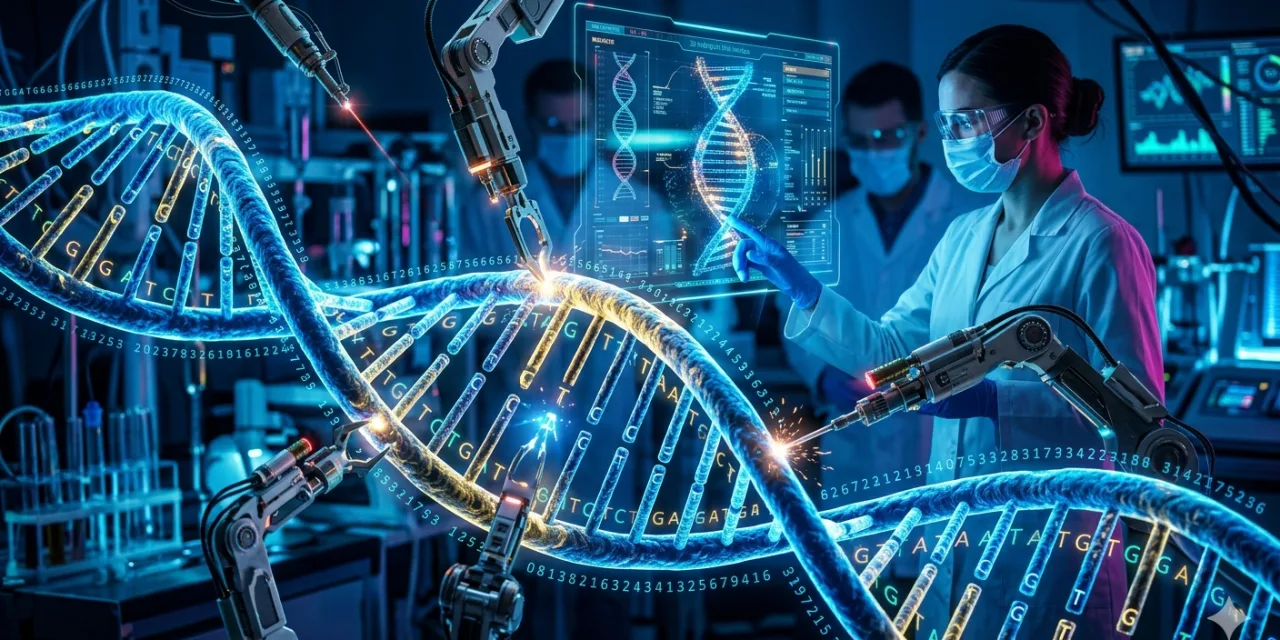
In early 2025, a team of physicians and scientists at the University of Pennsylvania and the Innovative Genomics Institute received an infant with a rare and devastating metabolic disorder for which no approved treatment existed. Within six months they had designed, tested, and delivered a bespoke CRISPR gene therapy specifically for that child — the first personalised in vivo CRISPR treatment ever administered to a human being. The infant responded. The treatment worked. A disease that had been untreatable the year before was addressed by a therapy that did not exist six months earlier, designed for one patient alone.
This is not a press release. It is a description of where gene editing medicine stands in 2026 — a field that has moved so far and so fast from its 2012 laboratory origins that even scientists working within it regularly have to pause and recalibrate their sense of what is now possible. CRISPR, the gene editing technology at the centre of this revolution, has in thirteen years gone from a curious bacterial immune mechanism to an FDA-approved medicine, to an enabling technology for personalised on-demand therapies, to the most transformative biological tool in the history of medicine since the discovery of antibiotics.
And most people still do not know what it actually is.
This guide changes that. From the bacterial origin of CRISPR to the precision instruments of base editing and prime editing that have extended its reach far beyond its original design, from the first approved CRISPR medicine now curing patients across twelve countries to the clinical trials underway for cancer, cardiovascular disease, hereditary blindness, and Duchenne muscular dystrophy, from the agricultural applications that could reshape global food security to the ethical debates that the technology has forced into urgent public conversation — this is the complete, jargon-minimal guide to the technology that is rewriting the code of life.
What CRISPR Actually Is: The Bacterial Origin of a Human Revolution
CRISPR stands for Clustered Regularly Interspaced Short Palindromic Repeats. The name is a description of a pattern that scientists noticed in bacterial DNA in the late 1980s and spent two decades trying to understand. The answer turned out to be one of the most elegant systems in biology: CRISPR is a natural immune memory system that bacteria use to recognise and destroy viruses they have encountered before.
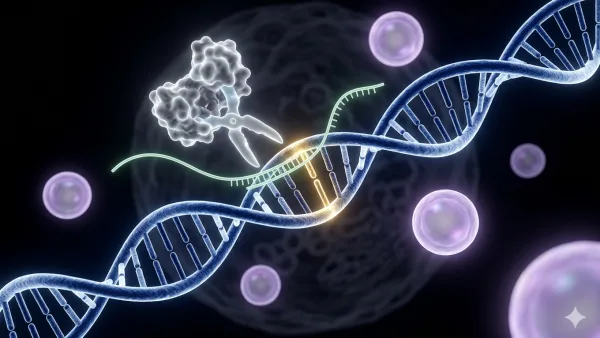
Here is how it works in bacteria. When a virus infects a bacterium and the bacterium survives, the bacterium incorporates a small fragment of the virus’s genetic material into its own DNA, sandwiched between the palindromic repeats that give CRISPR its name. This creates a genetic record of the viral encounter — a molecular wanted poster. If the same virus appears again, the bacterium transcribes that stored viral sequence into a piece of RNA, which then guides a specialised protein called Cas9 to find the matching sequence in the virus’s DNA and cut it — disabling the virus before it can replicate. The bacterium has, in effect, remembered the virus and deployed a targeted molecular weapon against it.
In 2012, biochemists Jennifer Doudna of UC Berkeley and Emmanuelle Charpentier, then at the University of Vienna, published the landmark paper demonstrating that this system could be reprogrammed — that by changing the guide RNA sequence, you could direct the Cas9 protein to cut DNA at any target sequence you specified. The molecular scissors were no longer pointed only at viral sequences that bacteria had encountered. They could be pointed at any sequence in any genome. Doudna and Charpentier were awarded the Nobel Prize in Chemistry in 2020 for this discovery. It took less than twelve years from that discovery to the first approved medicine built on their technology. That is extraordinarily fast for a medical breakthrough of this magnitude.
The key to CRISPR’s power and its difference from previous gene editing technologies is programmability combined with simplicity. Earlier gene editing approaches — zinc finger nucleases, TALENs — also used proteins to find and cut specific DNA sequences, but redesigning them for a new target required months of complex protein engineering for each new application. With CRISPR-Cas9, redirecting the system to a new target requires only changing the guide RNA — a much simpler chemical task that can often be accomplished in days. This programmability is what made CRISPR accessible to thousands of laboratories worldwide and triggered the explosion of research that followed.
How CRISPR-Cas9 Works: The Molecular Scissors in Detail
The CRISPR-Cas9 system that most people refer to when they say “CRISPR” operates through two essential components working in concert.
The first is the guide RNA — a short piece of RNA, typically around twenty nucleotides long, designed to be complementary to the target DNA sequence the researcher wants to edit. RNA uses the same base-pairing rules as DNA — adenine pairs with uracil (instead of thymine), guanine pairs with cytosine — which means a guide RNA will bind specifically and tightly to the matching DNA sequence and essentially nowhere else in the genome, provided the sequence is unique enough.
The second component is the Cas9 protein — a large molecular machine with two cutting domains, each of which snips one strand of the DNA double helix. When the guide RNA leads Cas9 to the target sequence and the RNA pairs with the DNA, Cas9 undergoes a conformational change that activates its cutting domains, producing what is called a double-strand break — a complete cut through both strands of the DNA helix at a precise location.
The cell’s own repair machinery then takes over, and this is where the editing actually happens. The cell has two main pathways for repairing double-strand breaks. The first, non-homologous end joining, is fast but imprecise — it essentially glues the cut ends back together, but the repair often introduces small insertions or deletions of DNA letters at the join site. These insertions or deletions typically disrupt the reading frame of any gene at that location, rendering it non-functional. This “gene knockout” approach — using CRISPR to disable a specific gene — is scientifically useful for studying gene function and therapeutically useful for diseases caused by an overactive or harmful gene. The second repair pathway, homology-directed repair, is more precise but less efficient. If a template sequence is supplied alongside the Cas9 and guide RNA, the cell can use that template to repair the break by copying it — effectively allowing researchers to insert or replace specific DNA sequences at the cut site. This approach is more technically demanding but enables true gene correction rather than mere gene disruption.
Roughly 58 percent of known disease-causing genetic variants are single-letter mutations — a single DNA base changed from what it should be. For these diseases, CRISPR-Cas9’s double-strand break approach is often too blunt an instrument. It can disrupt the gene but cannot reliably make the specific single-base correction needed. This limitation drove the development of the next generation of gene editing tools.
Beyond the Scissors: Base Editing and Prime Editing
If CRISPR-Cas9 is a pair of molecular scissors, base editing is a molecular pencil — capable of erasing a single incorrect DNA letter and writing the correct one in its place without cutting the double helix at all. David Liu at the Broad Institute of MIT and Harvard, who received the 2025 Breakthrough Prize for Chemistry for this work, developed base editing in 2016 by attaching a chemical modification enzyme to a catalytically disabled Cas9 protein. The disabled Cas9 — which can still navigate to the target sequence via its guide RNA but cannot cut — carries the editing enzyme to the right location, where it chemically converts one DNA base to another. Current base editors can convert adenine to inosine (which the cell reads as guanine) or cytosine to uracil (which the cell converts to thymine), covering the most common classes of disease-causing single-letter mutations. Crucially, the conversion happens without creating a double-strand break, dramatically reducing the risk of unintended insertions or deletions at the edit site.
Prime editing, introduced by David Liu’s laboratory in 2019, extends the precision of base editing further. Where base editors can convert one type of base to another, prime editing can make any type of substitution, small insertion, or small deletion — it is a find-and-replace for the genome, capable of searching for a specific sequence and replacing it with a specified new sequence, all without a double-strand break. The system uses a modified guide RNA that carries both the targeting sequence and a short template specifying what the edited sequence should look like, combined with a reverse transcriptase enzyme that copies the new sequence into the target site. MIT researchers reported in late 2025 that they had reduced the error rate of prime editing by sixty-fold by modifying the key proteins driving the editing process — a breakthrough that substantially improves prime editing’s safety profile for therapeutic applications.
Prime editing has already moved from laboratory demonstration to clinical reality. It was used to successfully treat a patient with chronic granulomatous disease — a rare disorder that weakens white blood cell function, leaving the patient vulnerable to life-threatening infections — in the first demonstration of prime editing as a clinical intervention. The treated patient had no serious adverse events and showed robust restoration of normal white blood cell function, at levels that may be curative. This represents a qualitative leap beyond even what CRISPR-Cas9 alone was capable of: not disrupting a harmful gene, but precisely correcting the specific mutation responsible for the disease.
The Innovative Genomics Institute’s 2026 update describes this evolution as the transition from CRISPR 1.0 — which could disable genes but struggled with corrections — to CRISPR 2.0, which rewrites genetic information with the precision of a copy editor. The analogy is apt. The earlier tools were powerful but blunt. The current generation can find a single typographical error in a three-billion-letter document and correct it without touching a single surrounding letter.
The First Approved CRISPR Medicine: Casgevy and What It Means
In November 2023, the UK’s Medicines and Healthcare Products Regulatory Agency became the first regulatory body in the world to approve a CRISPR-based therapy. The FDA followed on December 8, 2023. The therapy — Casgevy, developed jointly by Vertex Pharmaceuticals and CRISPR Therapeutics — is approved for the treatment of sickle cell disease in patients twelve years of age and older with recurrent vaso-occlusive crises, and for transfusion-dependent beta-thalassemia.
Sickle cell disease is an inherited blood disorder affecting approximately 100,000 people in the United States — predominantly African Americans — and over three million people worldwide, the vast majority in sub-Saharan Africa. It is caused by a single mutation in the gene encoding haemoglobin, the protein that carries oxygen in red blood cells. The mutation causes red blood cells to adopt a crescent or sickle shape, which causes them to block blood vessels, triggering episodes of severe and debilitating pain called vaso-occlusive crises, progressive organ damage, and a median life expectancy of approximately 45 years in the United States — lower in settings without access to modern supportive care. Transfusion-dependent beta-thalassemia is a related haemoglobin disorder in which the body produces insufficient functional haemoglobin, requiring patients to receive regular blood transfusions throughout their lives.
Casgevy does not directly correct the mutation responsible for sickle cell disease. Instead, it uses CRISPR-Cas9 to edit a gene called BCL11A in the patient’s own blood stem cells — the cells in the bone marrow that produce all blood cells throughout life. BCL11A is a genetic switch that silences the production of foetal haemoglobin after birth, replacing it with adult haemoglobin. In patients with sickle cell disease, the adult haemoglobin produced is the defective sickled version. By disabling BCL11A, Casgevy reactivates the production of foetal haemoglobin in adult red blood cells — and foetal haemoglobin works normally, compensating for the defective adult haemoglobin and preventing cells from sickling. The process requires collecting the patient’s own blood stem cells, editing them outside the body in the laboratory, and returning them via a one-time infusion following chemotherapy to clear existing bone marrow cells and make space for the edited ones to engraft.
The clinical results are, by the standards of a disease that has resisted curative treatment for decades, dramatic. In the phase III trial data, the vast majority of treated patients with sickle cell disease experienced complete or near-complete elimination of vaso-occlusive crises — many going from episodes that required hospitalisation multiple times per year to none at all. As of spring 2026, Casgevy has been approved in the United States, the United Kingdom, the European Union, Canada, Switzerland, Bahrain, Kuwait, Saudi Arabia, and the United Arab Emirates.
Casgevy’s approval is not merely a treatment milestone. It is a proof-of-concept at regulatory scale that CRISPR-based medicine is safe enough and effective enough to cross the approval threshold in major regulatory jurisdictions. The same basic infrastructure — CRISPR editing of a patient’s own cells, followed by transplantation — can in principle be redirected toward other blood disorders, immune system diseases, and beyond. The first approval is a starting gun for a category of medicine, not merely a single product.
The Challenge of Cost and the Question of Access
Casgevy comes with a price tag that creates an immediate and serious tension between the scientific achievement and its real-world impact. The therapy is priced at approximately $2.2 million per patient in the United States — reflecting the extraordinary complexity of manufacturing a personalised, patient-specific biological product, the cost of the clinical development that produced the evidence of safety and efficacy, and the commercial reality of a one-time cure in a market structured around ongoing treatment. The lifetime healthcare costs of managing severe sickle cell disease with recurrent hospitalisations in the United States run to approximately $6 million — which makes a $2.2 million one-time cure economically rational from an insurer’s perspective over a long enough time horizon. But that calculation depends on the patient being in a healthcare system where the insurer is willing and able to pay the upfront cost and carry the coverage over the relevant period.
The harder problem is global access. Sickle cell disease is predominantly a disease of sub-Saharan Africa, where it affects millions of people who live in healthcare systems with no realistic pathway to a $2.2 million CRISPR therapy. The countries where the burden of sickle cell disease is highest are the countries least able to access its cure. This is not a new problem in medicine — antiretroviral therapy for HIV, monoclonal antibodies for cancer, and many other breakthrough treatments have traced the same arc from expensive invention in wealthy-country markets to eventual wider availability — but it is a problem that the scientific community, regulatory bodies, and payers are grappling with explicitly in the context of CRISPR medicine, because the disparity between where the disease lives and where the treatment is accessible is so stark.
The answer, if it comes, will likely require a combination of lower-cost manufacturing approaches — in vivo delivery of CRISPR components that eliminates the costly ex vivo cell editing step — and deliberate pricing and access programmes in lower-income country markets. Both are areas of active research and negotiation in 2026.
The Clinical Pipeline: What Is in Trial in 2026
Casgevy’s approval has opened the door to a broad and rapidly expanding clinical pipeline. The Innovative Genomics Institute’s 2026 clinical trials update documents active trials across a range of conditions that would have seemed impossibly ambitious for gene editing medicine even five years ago.
Cancer is the largest and most diverse application area, with CRISPR-based approaches spanning multiple strategies. The most developed is the use of CRISPR to engineer CAR-T cells — immune cells modified to recognise and attack cancer — with the editing used to improve their persistence, reduce their tendency to attack normal tissue, and enable allogeneic (donor-derived, off-the-shelf) manufacturing. Trials are underway for acute lymphocytic leukaemia, acute myeloid leukaemia, multiple myeloma, non-Hodgkin’s lymphoma, and solid tumours. The January 2026 IGI update notes that melanoma patients treated with CRISPR-enhanced immune cell therapies showed significant responses, and CRISPR genome-wide screens — which systematically disable each gene in a cancer cell to identify which ones the cancer depends on for survival — have identified synthetic lethal targets across fifteen cancer types, providing a roadmap for future targeted therapy development.
Cardiovascular disease is an emerging and commercially important application area. High LDL cholesterol is responsible for a significant proportion of heart attacks and strokes globally. CRISPR-based approaches targeting PCSK9 — a gene whose loss-of-function variants are associated with dramatically reduced cardiovascular risk — have advanced through early clinical trials with promising results. A single CRISPR edit in liver cells could, in principle, provide the equivalent of lifelong statin therapy without daily medication. Beam Therapeutics’ base editing treatment for alpha-1 antitrypsin deficiency — a genetic liver disease that also causes lung disease — demonstrated dose-dependent correction of the disease-causing protein in the highest dose cohort, with approximately 90 percent of the protein in participants’ blood being the healthy version by day fourteen, sustained at day twenty-eight. This is the first ever demonstration of using CRISPR to directly correct a disease-causing mutation rather than simply disrupting a gene.
Hereditary blindness conditions including Leber congenital amaurosis — a form of blindness caused by mutations in specific genes expressed in retinal cells — have been the subject of pioneering trials delivering CRISPR components directly into the eye. The eye is an immunologically privileged organ with limited systemic exposure, making it a relatively accessible target for in vivo CRISPR delivery. Encouraging early-phase data showing improvement in light sensitivity in some patients has advanced these trials to larger cohorts.
Duchenne muscular dystrophy, a progressive muscle-wasting disease caused by mutations in the dystrophin gene, is the subject of multiple trials using exon-skipping approaches — CRISPR edits that allow cells to skip over the mutated section of the dystrophin gene and produce a shorter but partially functional protein. The February 2026 FDA approval of a Study May Proceed notification for Precision BioSciences’ PBGENE-DMD programme represents a regulatory green light for one such trial. Three of the four initially treated patients showed improvement in a broad range of strength and function measures, generally exceeding outcomes from similar participants in a natural history study.
HIV remains a target for CRISPR approaches that aim not merely to suppress viral replication — as current antiretroviral therapy does — but to excise the integrated HIV genome from infected cells, potentially offering a functional cure. These approaches remain technically challenging and in earlier stages of clinical development than blood disorder applications, but the therapeutic rationale is clear and multiple research groups are pursuing it.
The 2026 Breakthroughs: What This Year Has Already Added
The pace of CRISPR research in the first months of 2026 has been remarkable even by the standards of a field that is accustomed to rapid progress.
UNSW Sydney’s January 2026 breakthrough demonstrated that CRISPR can turn silenced genes back on without cutting DNA at all — by removing epigenetic tags, the chemical markers attached to DNA that regulate which genes are active. The research confirmed that these tags actively silence genes rather than merely appearing as passive markers in inactive regions, resolving a decades-long scientific debate. The immediate clinical application is particularly striking: this gentler form of epigenetic editing could reactivate the foetal haemoglobin gene in sickle cell patients without the need for any DNA cutting — a potentially safer therapeutic route to the same outcome that Casgevy achieves through Cas9 editing. The Innovative Genomics Institute’s January 2026 clinical update notes that UNSW’s approach represents a new branch of the CRISPR toolbox — epigenetic editing — that operates above the level of DNA sequence and could open therapeutic applications that neither base editing nor prime editing reaches.
MIT researchers reported a sixty-fold reduction in prime editing error rates by modifying the proteins that drive the editing process. This is not a marginal improvement. It is the difference between a technology that introduces occasional unintended edits — a meaningful safety concern for clinical applications — and one that operates with near-perfect fidelity. The improvement brings prime editing substantially closer to the precision standard required for clinical use in a broad range of disease applications.
The University of Tokyo’s January 2026 development of a streamlined two-step CRISPR-Cas9 method enables full-length gene insertion — placing an entire corrected gene into a precisely specified location in the genome, rather than making a small edit. This capability, previously limited by the technical difficulty of inserting long DNA sequences via homology-directed repair, opens the door to diseases where the mutation is too complex or too variable for single-letter correction approaches.
Lipid nanoparticle delivery for skeletal muscle — reported in a March 2026 study — addresses one of the most significant remaining technical obstacles in in vivo CRISPR therapy: delivering gene editing components to muscle tissue throughout the body. Lipid nanoparticles, the same delivery vehicle used in mRNA COVID-19 vaccines, have been successfully adapted for RNA delivery to muscle cells in animal models. If this approach translates to humans, it could enable CRISPR therapies for muscular dystrophies and other muscle diseases to be delivered systemically rather than by direct injection into specific muscles — a dramatically more practical delivery route.
CRISPR in Agriculture: Rewriting the Food System
While the medical applications of CRISPR dominate public attention, the technology’s impact on agriculture may ultimately affect a larger number of people over a longer timeframe. CRISPR offers plant breeders a dramatically faster and more precise alternative to traditional selective breeding — changes that once required ten to fifteen years of crossbreeding can now be made in a single generation, and with precision that targets specific traits without the random genomic changes that traditional breeding introduces.
The regulatory landscape for CRISPR crops varies significantly by jurisdiction, with some countries treating CRISPR-edited crops more like traditionally bred varieties than like genetically modified organisms — a distinction that significantly affects the time and cost required to bring a new variety to market. The United States, Argentina, Brazil, and Japan have all adopted regulatory frameworks that allow certain CRISPR edits in plants without the full GMO approval process, provided no foreign DNA is inserted into the genome.
The applications under development span the urgent problems facing global agriculture. Drought-tolerant wheat varieties edited to survive in conditions that would kill current commercial varieties. Disease-resistant versions of cacao, banana, and rice that could prevent the devastation that fungal and bacterial pathogens have historically caused to global crop yields. Varieties with improved nutritional profiles — higher protein content, reduced allergenicity, enhanced levels of specific vitamins. Even the development of CRISPR-ready mosquito strains, reported in March 2026, represents an application to vector control: engineering malaria-transmitting mosquito populations in ways that could reduce disease transmission. The scope of CRISPR’s agricultural reach is, in its potential, as transformative as its medical applications — perhaps more so, measured by the number of lives that better food security could improve.
The Ethics: What We Should and Should Not Do
No technology as powerful as CRISPR can be discussed honestly without confronting its ethical dimensions, and those dimensions are genuinely serious and genuinely unresolved. The field divides its ethical concerns roughly into somatic editing — changes made to cells of a living individual that affect only that person and are not heritable — and germline editing — changes made to embryos, eggs, or sperm that would be inherited by all future descendants of that individual.
Somatic gene editing, which encompasses all the clinical applications described above, is subject to the same ethical frameworks that govern any experimental medical treatment: informed consent, risk-benefit assessment, regulatory oversight, and equitable access. These are challenging standards to meet, but they are the standards that medicine already applies. The ethical debates around somatic CRISPR editing are important and ongoing, but they are not categorically different from the debates around any other powerful medical intervention.
Germline editing is categorically different. A heritable change to a human embryo would persist in every cell of the resulting person and would be passed to their descendants indefinitely. It is, in effect, an edit to the human gene pool. In 2018, Chinese scientist He Jiankui demonstrated this was technically possible by producing the first gene-edited human babies — twin girls whose CCR5 gene had been disabled in the hope of providing HIV resistance — without the scientific community’s knowledge or consent, and without the ethical and safety groundwork that would be required to justify such an experiment. He Jiankui was subsequently imprisoned in China for three years. His experiment is universally regarded by the scientific community as a serious ethical violation — not because germline editing is inherently wrong in all conceivable future circumstances, but because it was conducted outside the ethical and regulatory frameworks, on non-consenting future persons, without the safety evidence that would be required to justify it.
The response from the scientific community has been to call for a global moratorium on clinical germline editing pending the development of the ethical, regulatory, and scientific frameworks that could — if ever developed — justify moving forward for specific, clearly defined therapeutic applications. International commissions have issued reports. Professional organisations have issued guidelines. Binding international agreements comparable to those governing nuclear technology — which is what would be needed for genuinely enforceable oversight — do not yet exist. This is one of the most important governance gaps in contemporary science, and it is urgent precisely because the technology is real, is advancing, and is accessible to researchers in jurisdictions with varying standards of ethical oversight.
The access question — who gets cured and who does not, when the cure costs $2.2 million — is the other major ethical challenge that the approval of Casgevy has forced into concrete, urgent form. The scientific community has, to its credit, been candid about this problem. The question of how to make CRISPR medicine available to the populations that need it most — including the millions with sickle cell disease in sub-Saharan Africa — does not have a satisfactory answer in 2026, but it is being asked loudly and persistently by people who do not intend to let it be quietly set aside.
Where CRISPR Is Heading: The Next Decade
The trajectory from 2026 forward, if the technology continues on its current path, is one of expanding therapeutic reach, improving precision, falling Costs, and — most importantly — a shift from ex vivo cell editing toward in vivo delivery that would dramatically simplify treatment and extend its geographic accessibility.
The number of approved CRISPR-based therapies is expected to grow from one in 2023 to potentially a dozen or more by 2030. Blood disorders will remain the most common near-term targets, but regulatory approvals for hereditary blindness, liver diseases, and certain cancers are plausible within this timeframe. The first personalised on-demand CRISPR therapy — administered to the infant at the Innovative Genomics Institute in 2025 — has established both the scientific pathway and the regulatory precedent for rapid approval of platform therapies designed for individual patients. This precedent could transform the treatment of the approximately seven thousand known rare genetic diseases, the vast majority of which currently have no approved therapy.
The delivery problem — getting CRISPR components into the specific cells that need editing in a living person without causing harm elsewhere — is the field’s primary remaining technical challenge. Lipid nanoparticles have solved this problem for liver cells and, increasingly, for other tissues including lung and now muscle. Virus-like particles and engineered delivery vehicles are expanding the accessible target tissue range further. As delivery technology matures, the range of diseases that can be addressed by in vivo CRISPR editing without extracting and re-implanting cells will expand dramatically — and with it, the potential for lower-cost treatments accessible outside of major academic medical centres.
CRISPR began as a bacterial immune mechanism nobody outside a small circle of microbiologists had heard of. It became a Nobel-winning discovery that transformed biology. It has become an approved medicine that is curing diseases that had no cure. And in 2026, with prime editing reducing errors sixty-fold, with epigenetic editing turning genes on without touching DNA, with personalised therapies designed and delivered in six months, and with the regulatory and scientific infrastructure for the next generation of approvals taking shape — it is still accelerating.
The code of life is not immutable. It is, it turns out, editable. The question the next decade will answer is not whether we can edit it, but whether we will do so wisely.




0 Comments
No comments yet. Be the first to share your thoughts!