

Most founders are running 2020 playbooks in a 2026 world. The Dropbox referral program, the Airbnb Craigslist hack, the Hotmail email signature — these are the stories that still dominate growth hacking guides, written when Obama was in his first term and digital advertising was cheap. The internet has changed. Privacy laws exist. iOS privacy changes have broken attribution models that entire growth teams were built around. Customer acquisition costs on paid channels have climbed steadily for a decade and show no sign of reversing. And AI-generated content has flooded the search landscape, making organic content both more important and more contested. The playbooks that worked when CAC was low and attribution was simple do not transfer cleanly to 2026.
What does transfer is the underlying discipline: rapid, data-driven experimentation across the full customer funnel, with a systematic process for prioritising where to focus, running high-quality experiments quickly, and doubling down ruthlessly on what the data shows is working. The tactics have evolved significantly; the framework has not. Deel grew from a small HR tech startup in 2021 to a $12 billion valuation by 2025 — not by copying Airbnb’s referral program, but by engineering a growth loop where every global hire became a viral node in their network. Their product was the growth engine. Every customer who onboarded automatically expanded the network’s value for the next potential customer. That is what growth hacking looks like in 2026: not a clever one-time trick, but a self-reinforcing system that compounds over time.
This guide covers the growth hacking framework that actually works in 2026 — the AARRR funnel model and how to use it, the ICE prioritisation system, the five growth tactics with the strongest data behind them right now, the tools growth teams use, and the honest distinction between what growth hacking is and what it is not. If your deal size is under $10,000 and your team is under 20 people, you do not need a growth marketing engine. You need a founder who runs three experiments a week and is not afraid to kill ideas that do not move the number. This guide is how you become that founder.
The Most Important Prerequisite: Product-Market Fit First
The single most common growth hacking mistake is starting before you are ready — applying growth tactics to a product that has not yet achieved product-market fit. Growth hacking accelerates whatever momentum already exists in the product. If users are not retained, not referring, and not expanding their use organically, growth tactics amplify the problem by bringing in more users who also leave. Pouring water into a leaky bucket faster does not fix the leak — it empties your bank account faster.
The test for product-market fit that Sean Ellis originally used and that has been validated repeatedly in practice is simple: ask a representative sample of your active users “how would you feel if you could no longer use this product?” If 40 percent or more say “very disappointed,” you have achieved sufficient product-market fit to begin scaling growth. Below 40 percent, the priority is product iteration, not growth. Almost every startup that has successfully scaled has validated this threshold — and almost every one that has spent significant resources on growth before reaching it has regretted it.
Beyond the Ellis test, the behavioural signals of product-market fit are visible in the metrics: monthly churn below 2 percent in B2B (meaning customers who try the product mostly stay), organic referrals arriving without a formal referral programme (meaning customers care enough to tell others), and customer conversations where the language shifts from “this is interesting” to “I couldn’t do my job without this.” These signals indicate that growth investment will compound on a solid base rather than being absorbed by a product that is not yet good enough to retain the users it acquires.
The AARRR Framework: Full-Funnel Thinking
The AARRR model — Acquisition, Activation, Retention, Referral, Revenue — was coined by investor Dave McClure and remains the most useful framework for thinking about growth because it forces full-funnel analysis rather than the obsessive focus on acquisition that characterises most growth discussions. The five stages of the funnel are sequential dependencies: even the most sophisticated acquisition engine cannot produce revenue without adequate activation, and even perfect retention cannot produce growth without sufficient acquisition. Understanding where the bottleneck is — which stage of the funnel is losing the most users or value — determines where growth investment should be focused.
Acquisition is how potential customers first discover and encounter your product. The question is not “how do I get more traffic?” but “which acquisition channels produce the users who are most likely to activate, retain, and refer?” CAC, conversion rate from visitor to sign-up, and the quality (activation rate, LTV) of users by acquisition channel are the metrics that matter — not raw traffic volume. A channel that produces 100 high-quality sign-ups is dramatically more valuable than one that produces 1,000 sign-ups with 3 percent activation.
Activation is the moment when a new user first experiences the core value your product delivers — the “aha moment” that converts a sign-up into a genuinely engaged user. It is the most consistently underinvested stage of the growth funnel. Ninety percent of startups fail within their first five years, and most of them fail not because they lacked clever acquisition hacks but because they never built a systematic understanding of where users drop off — which is typically in activation. If users sign up but never reach the feature that makes the product valuable, acquisition optimisation is irrelevant. The highest-leverage activation optimisation is shortening the time to the aha moment: redesigning onboarding to guide users to value faster rather than requiring them to discover it themselves.
Retention is whether users come back and keep using the product over time. It is the foundation on which all other growth metrics rest. A product with strong retention compounds growth from its existing user base; one with poor retention requires constant acquisition to replace departing users. In SaaS, retention is measured by monthly churn (the percentage of customers who cancel each month) and by engagement metrics that predict future churn — daily active user ratio, feature adoption breadth, and the consistency of usage over time.
Referral is whether existing users bring new users into the product through recommendations, sharing, or direct invitations. Strong referral channels produce customers at dramatically lower CAC than paid acquisition, with higher conversion rates (trusted recommendation vs cold discovery) and higher LTV (referred customers are more pre-qualified and tend to stay longer). Well-designed B2B SaaS referral programs generate 15 to 25 percent of new customer volume at 40 to 60 percent lower CAC than other channels.
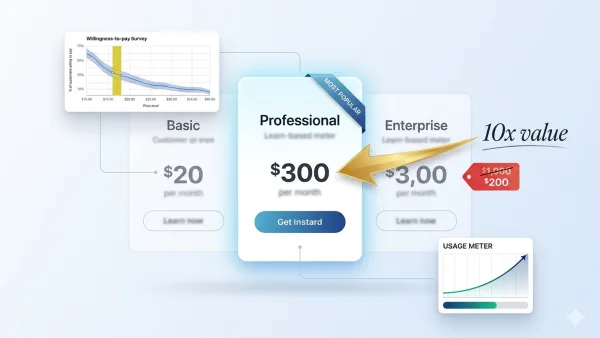
Revenue is whether the business is extracting appropriate value from the users it retains — not just whether they pay at all, but whether they are on the right pricing tier, whether expansion opportunities are being captured, and whether the revenue per user is growing over time. Revenue optimisation at the growth stage is primarily about expansion: upgrading users to higher tiers, capturing usage expansion through usage-based pricing, and systematically identifying and executing upsell conversations at the right moments in the customer lifecycle.
ICE Scoring: How to Prioritise Growth Experiments
The challenge in growth hacking is not generating ideas — it is choosing which ideas to test first. Every growth team has more potential experiments than time to run them, and the selection of which experiments to prioritise directly determines the velocity of the growth programme. ICE scoring — a simple framework for prioritising experiments based on three dimensions — is the standard tool for this decision.
ICE stands for Impact, Confidence, and Ease. Impact estimates how much positive effect the experiment will have if it works — measured in the specific metric you are trying to move (conversion rate, activation rate, MRR). Confidence estimates how likely the experiment is to work, based on prior evidence from your own data, comparable cases from similar companies, and the strength of the hypothesis. Ease estimates how much time and engineering effort the experiment requires. Each dimension is scored on a 1 to 10 scale; the three scores are multiplied together to produce an ICE score that allows direct comparison between experiments with very different characteristics.
The ICE score is not a perfect ranking system — it is a forcing function that makes prioritisation discussions explicit and data-driven rather than based on enthusiasm, hierarchy, or which idea sounds most impressive. The experiment with the highest ICE score gets run first. When the results come in, the learnings update the prioritisation of remaining experiments. Over time, the team builds a calibrated sense of which types of hypotheses tend to have high confidence scores in their specific context, and the quality of the prioritisation improves accordingly.
Volume matters more than cleverness in growth experimentation. Teams that run 10 growth experiments per month consistently outperform teams that spend the same time debating one big initiative. Most experiments fail — that is expected and normal. The goal is to fail fast, learn from each failure, and find the few experiments that produce compound improvements. An experiment culture that punishes failure produces fewer experiments, which produces slower learning, which produces slower growth. An experiment culture that treats every result — positive or negative — as valuable data produces more experiments and, consequently, more growth.
Product-Led Growth: The Highest-Leverage Growth System
Product-led growth (PLG) is the go-to-market strategy where the product itself is the primary driver of acquisition, expansion, and retention — users discover the product, derive value, and upgrade or invite others without a sales team initiating the relationship. Calendly’s viral embed (every meeting invitation sent by a Calendly user is an advertisement for Calendly that the recipient experiences), Notion’s template ecosystem (every shared Notion template is an acquisition channel), and Dropbox’s referral programme (every file shared by a Dropbox user is an invitation to join Dropbox) are PLG at its best. The product grows itself.
PLG requires a product that delivers value quickly enough that users reach the aha moment before any friction causes them to drop off, and that has a natural sharing or collaborative element that creates exposure to non-users through normal use. Not every product has these properties — a B2B enterprise compliance tool used entirely internally has no natural sharing mechanism. But for products where collaboration, sharing, or network effects are part of the value proposition, PLG can produce the most capital-efficient growth engine available.
The PLG implementation sequence: identify the aha moment precisely (the specific feature or outcome that turns a new user into a retained one), measure the time it currently takes new users to reach it, redesign onboarding to shorten that time as aggressively as possible, identify the natural sharing or referral moments in the product experience and build explicit sharing incentives at those moments, and track the viral coefficient (the number of new users each existing user generates, on average) as the primary metric of the PLG system’s health. A viral coefficient above 1.0 means the product grows exponentially without additional acquisition spend. Even a coefficient of 0.5 — where every two users generate one additional user — dramatically reduces the effective CAC of your other acquisition channels.
Content SEO: The Highest Long-Term ROI Growth Channel
Content SEO is the growth tactic with the highest long-term ROI and the most patience required. Articles ranking on page 1 of Google generate leads indefinitely — content published this month will compound value for three to five years. HubSpot grew from zero to $1.7 billion in ARR with a content-first approach: their blog became the dominant source of organic traffic for sales and marketing search terms, driving tens of thousands of qualified leads per month without paid acquisition.
The content SEO playbook for SaaS in 2026 begins with bottom-of-funnel keywords — terms that indicate purchase intent rather than general curiosity. “Best project management software for remote teams” converts dramatically better than “what is project management” because the user searching the former is evaluating options, not learning a concept. Bottom-of-funnel content should be written first, because it delivers immediate commercial value even at low traffic volumes. Middle-of-funnel content (comparison articles, “how to” guides for the problem your product solves) should follow once the bottom-of-funnel foundation is established. Top-of-funnel informational content — the content that brings the most organic traffic — should come last, because it takes the longest to rank and produces the least direct commercial return per visitor.
The challenge for content SEO in 2026 is the AI content flood: generative AI has made it trivially easy to produce large volumes of generic informational content, which means the search landscape is increasingly saturated with mediocre AI-written articles. The content that ranks and converts in this environment is not the content that covers a topic adequately — it is the content that provides something genuinely unavailable elsewhere: original research, proprietary data, expert perspective, or analysis that requires domain expertise no AI can replicate without access to internal information. Investing in original data (surveys, platform data, customer research) that forms the foundation of content is the most defensible content SEO strategy in 2026.
Founder-Led Growth on LinkedIn: The Most Underutilised B2B Channel
Founders who post consistently on LinkedIn — one post per weekday — report five to ten times more inbound demo requests than those who do not. This is the most underutilised growth channel for B2B SaaS founders in 2026, and the reason it works reflects a fundamental truth about B2B buying: buyers buy from people they trust, and LinkedIn is where B2B buyers go to evaluate the humans behind the products.
LinkedIn’s algorithm rewards personal content from real people far more than company page content. A founder with 3,000 followers posting consistently outperforms a company page with 30,000 followers posting the same content, because LinkedIn treats individual creator content as more authentic and more likely to generate engagement than brand content. The implication is that founder time spent building a personal LinkedIn audience is more valuable than equivalent time spent on the company’s LinkedIn page — a counterintuitive finding that most founding teams have not yet internalised.
The content that works is specific and honest. Build-in-public updates — MRR milestones, product launches, lessons learned from failures — generate disproportionate engagement because they are rare (most founders are reluctant to be publicly specific about their numbers) and because they create a narrative that followers want to follow over time. Customer stories with specific quantified outcomes (“this customer reduced onboarding time by 40 percent using our workflow feature”) demonstrate value concretely. Category insights — data-driven observations about the market that demonstrate expertise — establish authority. The combination of narrative transparency, customer validation, and domain expertise produces an audience that trusts the founder, which converts to trust in the product without requiring a formal sales process.
Referral Programmes: Engineering Viral Loops That Compound
Dropbox’s referral program generated 3,900 percent user growth over 15 months without any advertising spend — the most famous referral programme result in startup history. The mechanism: users received additional free storage for referring new users, and the invited new users also received additional storage. Both parties benefited; the incentive aligned with the product’s value proposition (more storage); and every person who shared a Dropbox file was a potential referral recipient because the sharing experience demonstrated the product’s value in context.
The principles that made Dropbox’s referral programme work are generalisable: the incentive should align with the product’s core value rather than being a generic discount or cash reward; the referral request should be timed immediately after the user experiences their aha moment, not on day one before they have found value or six months later when the enthusiasm has normalised; and the referral experience for the new user should include an immediate demonstration of the product value the referrer described. Well-designed B2B SaaS referral programmes generate 15 to 25 percent of new customer volume at 40 to 60 percent lower CAC than other channels.
The design mistakes that make referral programmes fail are equally instructive. Incentivising quantity rather than quality — offering rewards for any referral regardless of whether the referred user converts or retains — produces a large number of low-quality referrals from your most price-sensitive users, none of whom become meaningful customers. Asking for referrals at the wrong moment — too early, before the user has experienced value, or as part of a routine email rather than at a natural moment of product satisfaction — produces near-zero participation. And making the referral mechanism hard to find or hard to use — buried in account settings rather than surfaced at the moment when users are most likely to want to share — eliminates the conversion that moment of enthusiasm would otherwise produce.
Micro-Influencer Partnerships: The Paid Channel That Works
Micro-influencer marketing — partnering with creators who have 10,000 to 100,000 followers in a specific niche — delivers 60 percent higher engagement than macro-influencer campaigns, because micro-influencer audiences trust the creator more deeply and the content feels more authentic. For B2B SaaS products with a specific, identifiable professional audience, micro-influencers who are genuinely respected members of that professional community — a widely-followed developer advocate for a developer tool, a respected finance professional for a financial software product — can generate qualified trial sign-ups at CAC levels that are competitive with any other channel.
The execution approach that works is partnership rather than endorsement: engaging influencers who are genuine users of the product (or who could plausibly become genuine users), allowing them creative control over how they present the product rather than scripting a promotional message, and measuring performance on qualified trial sign-ups and conversion rather than on follower reach or impression counts. Micro-influencer campaigns that perform best are those where the creator genuinely found the product useful and is sharing that genuine experience with an audience that trusts their judgment — not campaigns where an obvious promotional script has replaced authentic voice.
Community Building: The Growth Channel That Cannot Be Copied
A community of engaged users — a forum, a Slack group, a Discord server, a newsletter — is the growth asset that competitors cannot simply replicate by copying your product. It takes time to build, requires genuine investment in the members’ success rather than just the community’s size, and compounds in value as members help each other, generate word-of-mouth, and develop the kind of brand attachment that makes them resistant to competitor offers. The most durable growth advantages of the companies that have sustained growth over multiple years — HubSpot’s content community, Notion’s template-sharing ecosystem, Salesforce’s Trailblazer community — are community assets, not product features.
Community building as a growth tactic is not primarily about creating a branded forum and waiting for users to fill it. It is about identifying the conversations your target users are already having — in Reddit threads, LinkedIn groups, Twitter/X communities, industry Slack workspaces — and contributing meaningfully to those conversations over time. Share insights, help others without asking for anything, answer questions that reveal your domain expertise. Followers who encounter you consistently in conversations where you are genuinely helpful become advocates before they become customers, and the audience you build through authentic community participation is more valuable than one built through broadcast content precisely because the relationship is founded on trust rather than attention.
The Experimentation System: How to Run Growth Like a Science Lab
The teams that win at growth in 2026 operate like scientific labs: continuously forming hypotheses, running controlled experiments, analysing results with statistical rigour, and applying learnings to the next round of experiments. The best marketing teams run experiments constantly, implement winners quickly when something works (a B version that converts 15 percent better than A with 90 percent statistical confidence), and move immediately to the next experiment rather than celebrating or over-analysing.
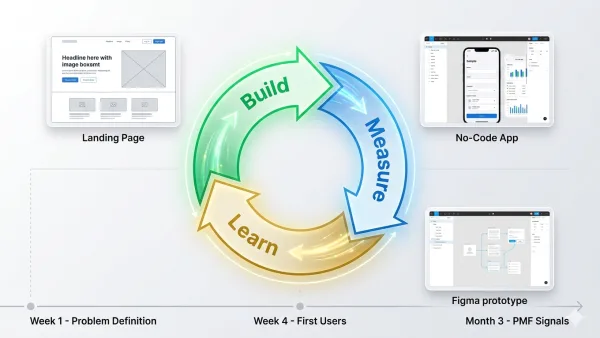
The practical experimentation system for an early-stage startup: maintain a running backlog of growth hypotheses, scored by ICE criteria, and pull from the top of the list every week. For each experiment, define the hypothesis precisely (if we change X, we expect Y to improve by Z because of W), the success metric, the minimum sample size required for statistical significance, and the minimum duration (at least two weeks to control for day-of-week effects). Run the experiment, measure the results against the hypothesis, document what you learned regardless of whether the outcome was positive or negative, and update the ICE scores of related experiments in the backlog based on what the experiment revealed.
The most common experimentation mistake is running experiments for too short a time or with too small a sample to achieve statistical significance, then acting on noise rather than signal. An experiment that runs for three days and shows a 40 percent improvement in conversion rate with 30 users in each variant is almost certainly measuring random variation rather than a real effect. The discipline of waiting for statistical significance — even when the early results look exciting — is what separates growth teams that make good decisions from those that systematically waste time implementing changes that do not actually work.
The honest summary of growth hacking in 2026 is this: the era of single clever hacks producing exponential growth is largely over for most markets and most products. What has replaced it is the era of systematic growth engineering — building self-reinforcing growth loops into the product, running high-velocity experiments across the full funnel, and compounding the gains from each experiment into a growth system that improves over time. Deel did not grow to a $12 billion valuation because they found a clever hack. They built a product where every customer automatically expanded the network’s value for the next potential customer — and then they ran hundreds of experiments to optimise every stage of the journey from discovery to expansion. That is what growth hacking looks like when it actually works.



0 Comments
No comments yet. Be the first to share your thoughts!