
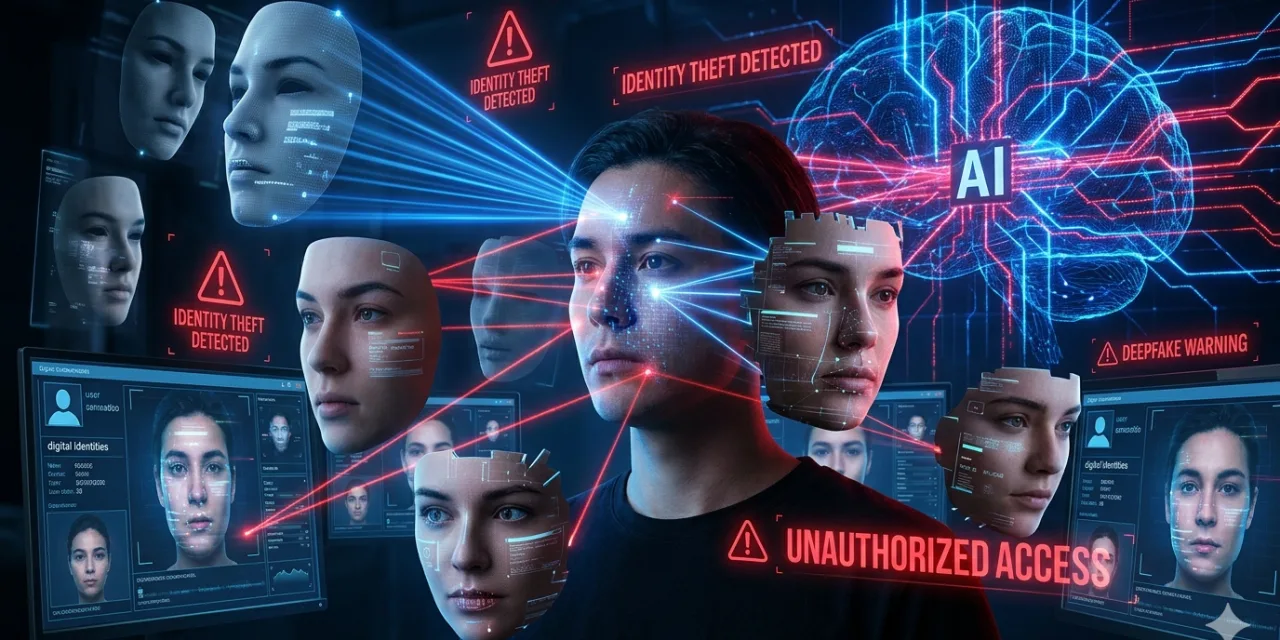
An employee at a large engineering firm received a video call from what appeared to be four of her company’s senior executives. They told her they needed an urgent, confidential transfer to complete a contract. She did not know any of these executives personally — they were based in other offices. The faces were familiar from the company website. The voices matched the recordings she had heard on all-hands calls. The urgency was professional but clear. She transferred $25 million. Every face on that call was a deepfake. Every voice was AI-generated. By the time the fraud was confirmed, the money was gone.
This was not a hypothetical scenario constructed for this article. It happened at Arup, a global engineering and consulting firm, in early 2024, and it remains among the most striking documented cases of deepfake-enabled identity fraud. It is also, as 2026 arrives, no longer exceptional. It is the visible end of a trend that is reshaping identity theft from an opportunistic street-level crime into a sophisticated, industrialised operation powered by artificial intelligence, vast datasets of stolen personal information, and a criminal infrastructure that operates at a scale and speed that manual detection cannot match.
The scale of the problem is already staggering. The FTC recorded more than 1.1 million identity theft reports in the United States in 2024 — a 9.5 percent increase from the year before. Total losses from identity theft reached $12.5 billion in 2024. When broader identity fraud and scams are included, US consumers lost $47 billion in 2024 alone, with 18 million individuals falling victim to traditional identity theft that year. Globally, losses from identity fraud exceeded $50 billion in 2025, and early indicators suggest 2026 will surpass that figure. Identity theft now happens once every 22 seconds in the United States. Nearly one in three Americans has experienced it at some point in their lives.
What most people still imagine when they hear “identity theft” — a stolen wallet, a data breach notice, a fraudulent credit card charge — describes a threat environment that existed several years ago. The threat environment of 2026 is materially different in the tools attackers use, the scale at which they operate, the sophistication of the fraud they commit, and consequently in the depth of protection that individuals and organisations need to mount against it. This guide covers all of it: what identity theft looks like in 2026, who is most at risk, the specific new attack methods that AI has enabled, and the ten concrete steps that provide the most meaningful protection — including several that cost nothing at all.
The Many Faces of Identity Theft: Understanding the Full Spectrum
Identity theft is not a single crime. It is a category of offences that share the common element of using someone else’s personal information without authorisation, and the specific variant matters enormously for understanding both the immediate impact and the recovery path.
Financial identity theft remains the most reported category, accounting for over 40 percent of all identity theft cases. It encompasses credit card fraud — where stolen card details are used to make unauthorised purchases — as well as new account fraud, where a thief uses stolen personal information to open credit accounts, take out loans, or establish lines of credit in a victim’s name. The victim typically discovers new account fraud when unexplained delinquent accounts appear on their credit report, sometimes months after the accounts were opened. Over 70 percent of identity theft victims experience some form of digital account takeover as part of the fraud — unauthorised access to existing online banking, investment, or retail accounts that provides immediate access to funds without the delay of building a new credit profile.
Synthetic identity theft is the fastest-growing variant and among the most difficult to detect. Rather than stealing an entire existing identity, synthetic identity fraudsters combine a real element — most commonly a Social Security number, often obtained from a data breach — with fabricated information: a name, date of birth, and address that belong to no real person. This composite identity is then used to apply for credit, build a payment history over months or years, and ultimately execute a “bust-out” — maximising credit limits across multiple accounts before vanishing. Synthetic identity fraud was used in one in five (21 percent) of first-party frauds detected in 2025 and is estimated to comprise approximately 30 percent of all identity fraud cases. Because the identity is partially real and partially fabricated, the victim whose SSN was used may not discover the fraud for years, and the immediate fraud victim — the lender who extended credit — may not identify the loss until the synthetic identity has disappeared entirely.
Medical identity theft occurs when someone uses another person’s insurance information or personal data to obtain medical treatment, prescriptions, or equipment. It is particularly serious because the consequences extend beyond financial loss. If a thief receives medical treatment in a victim’s name, the fraudulent information may be added to the victim’s medical records — potentially affecting diagnoses, treatment decisions, and insurance coverage for years afterward. Seniors are especially vulnerable to healthcare-related identity theft, accounting for an estimated 35 percent of medical identity cases. Americans over 60 experience far greater financial losses from identity theft than any other age group — $3.4 billion in 2023 alone — despite representing a smaller proportion of total reports.
Tax identity theft involves filing a fraudulent tax return using a victim’s Social Security number to claim a refund before the legitimate taxpayer files their own return. The victim typically discovers the fraud only when they attempt to file and find that a return has already been submitted in their name. The IRS Identity Theft Central resource documents this as a persistent and growing attack vector, intensified in 2026 by AI tools that generate convincing fake tax letters and AI-cloned voices mimicking IRS officials to pressure victims into payments that do not exist.
Criminal identity theft occurs when someone uses another person’s identity during an arrest or legal proceeding — presenting the victim’s ID when stopped by police, for example. The victim discovers this crime when warrants appear for offences they did not commit, or when background checks reveal criminal records that are not theirs. Recovery from criminal identity theft is among the most procedurally complex, requiring coordination with law enforcement and courts across potentially multiple jurisdictions.
Child identity theft represents a particularly troubling category precisely because it can go undetected for the longest time. A child’s Social Security number has no established credit history — making it attractive for synthetic identity construction — and the fraud may not be discovered until the child reaches adulthood and applies for their first credit card or student loan. In 2022, 915,000 children were victims of identity theft, and the true figure is likely higher given the structural difficulty of detection.
How Identity Is Stolen in 2026: The Sources and the Pipeline
Understanding how thieves obtain personal information is essential to understanding which protective measures actually interrupt the fraud pipeline, and which address risks that are already downstream of the point where prevention is possible.
Data breaches are the primary raw material source. When a company’s database is compromised, the stolen data — which may include names, Social Security numbers, dates of birth, email addresses, phone numbers, passwords, and financial account details — typically ends up for sale on dark web marketplaces within hours of the breach. The National Public Data breach of 2024, which exposed over 2.9 billion records, is estimated to have affected essentially every American citizen. By 2026, the cumulative effect of years of major data breaches means that the personal information of the vast majority of adults in developed countries is available somewhere on the dark web at a price that criminal operators can afford. This is not a hypothetical risk. It is the baseline state of personal data exposure that everyone is managing, whether they know it or not. Cyberattacks were the leading cause of personal data theft, responsible for 74 percent of breaches in 2023.
Data brokers are a legal but deeply problematic secondary source. Data brokers are companies that aggregate personal information from public records, social media, consumer databases, loyalty programmes, and dozens of other sources, then sell that information to anyone willing to pay — including, in practice, to criminals who use it to build profiles of potential victims or to add credibility to synthetic identities. The data broker ecosystem is one of the least visible and most significant contributors to identity theft risk, precisely because it operates legally and generates the detailed personal profiles that make targeted social engineering attacks convincing. AI tools accelerate the aggregation and exploitation of this data, consuming breach records, social media profiles, and data broker listings to construct targeted attack intelligence at machine speed.
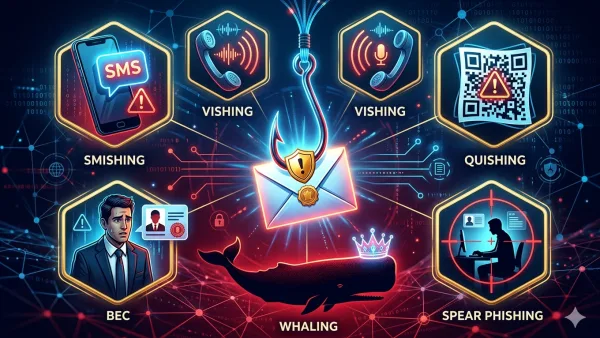
Phishing, smishing, and vishing remain primary credential theft vectors. Phishing attacks increased by 1,265 percent between 2022 and 2024, driven by the availability of generative AI tools that eliminate the grammatical errors and generic messaging that made earlier phishing campaigns recognisable. Email phishing, SMS phishing (smishing), and voice phishing (vishing) — including AI voice cloning that reproduces a familiar person’s voice from as few as three seconds of audio — are now indistinguishable from legitimate communications to recipients who are not specifically trained to apply the verification protocols that detect them.
Social media oversharing provides the raw material for targeted attacks. Seventy-eight percent of people share personal information on social media. The combination of a birthday, a mother’s maiden name visible in a family photograph caption, an employer listed in a profile, a school and graduation year, and a current city of residence provides everything an attacker needs to pass knowledge-based authentication questions, to construct convincing targeted phishing, and to begin building a synthetic identity. This information is shared voluntarily and publicly, and it is harvested systematically by both legitimate data brokers and criminal operators.
Physical theft methods persist alongside digital ones. Mail theft — intercepting financial statements, pre-approved credit offers, and government documents — remains a meaningful source of identity information, particularly for targeting older adults who are more likely to receive sensitive documents by post. Dumpster diving for discarded financial documents, account statements, and pre-filled forms continues to occur. Skimming devices on ATMs and payment terminals harvest card information at the point of transaction. These physical methods lack the scale of digital attacks but remain operationally relevant, particularly for criminals targeting specific individuals rather than conducting mass campaigns.
The AI Revolution in Identity Theft: What Has Changed and Why It Matters
The fundamental mechanism of identity theft has not changed: obtain personal information, impersonate the victim, extract value. What has changed dramatically is the speed, scale, sophistication, and accessibility of the tools available to execute that mechanism — and the result is a threat environment that is qualitatively different from what existed even three years ago.
Generative AI has industrialised phishing at a scale that previously required large criminal operations. A single actor with access to a commercial large language model can now generate thousands of personalised phishing emails per hour — each one tailored to a specific target, written in that target’s likely communication style, referencing their employer, their recent activity, their known contacts, and their geography. AI-related fraud climbed from 23 percent of cases in 2024 to 35 percent in early 2025, according to Experian’s UK Fraud and Financial Crime Report. Fraud losses facilitated by generative AI are predicted to reach $40 billion in the United States alone by 2027. The industrialisation of personalised fraud eliminates the trade-off that previously existed between scale and targeting precision — attackers can now have both simultaneously.
Deepfake technology has crossed the threshold from detectable to practically indistinguishable. The UK government predicted that 8 million deepfakes would be shared in 2025, up from 500,000 in 2023 — a 16-fold increase in two years. Deepfake attempts increased by a factor of 31 in 2023 compared to 2022. In 2026, deepfake video and audio generation is accessible through consumer-grade tools to anyone with a modest budget and a few hours of learning time. Voice cloning requires only three seconds of source audio. The ability to generate real-time deepfake video during a live call — as demonstrated in the Arup incident — is no longer the exclusive capability of well-resourced criminal operations. It is available to any criminal willing to pay for a subscription to the appropriate tool. Synthetic identities were used in 21 percent of first-party frauds detected in 2025, and analysts at Sumsub predict 2026 will see a boom in AI-driven autonomous fraud agents — coordinated fleets of AI systems conducting high-speed, multi-step identity attacks at scale, with the potential to overwhelm traditional anti-fraud systems.
Synthetic identity fraud has become one of the most financially damaging fraud categories. Synthetic identities blend real elements — a Social Security number from a data breach, a real address from a public record — with fabricated elements to create composite identities that appear more credible than real ones in many verification systems. Because they are not exact matches to any real person, they generate few of the alerts that simple identity theft does. PwC’s February 2026 fraud analysis identifies synthetic identity fraud as the defining fraud trend of 2026, particularly as it intersects with AI-generated documentation — digitally forged identity documents that pass automated verification checks — and deepfake biometric bypass tools that defeat liveness detection systems by submitting AI-generated video in response to real-time prompts. Digital document forgeries increased 244 percent in 2024 compared to the previous year.
Voice cloning scams represent an emerging and particularly disorienting attack vector. With only three seconds of audio — obtainable from a voicemail, a social media video, or a recorded customer service call — criminals can generate a convincing clone of any voice. These cloned voices are used in “grandparent scams” targeting older adults with calls that appear to come from distressed family members requesting emergency funds, in CEO fraud attacks where an executive’s voice authorises financial transactions, and in IRS impersonation schemes where a cloned government official’s voice demands immediate payment of fabricated tax liabilities. The disorientation of hearing a familiar voice making an urgent request overwhelms the rational scepticism that might otherwise trigger verification.
Who Is Most at Risk and Why
Identity theft affects every demographic, but the type of fraud and the typical impact vary meaningfully by age, behaviour, and the specific information an individual has exposed through their digital and physical life.
People in their thirties are currently the most likely to report identity theft — the FTC recorded 291,807 reports from this age group in 2024. This reflects a combination of factors: active credit use, extensive digital footprints across social media and commercial platforms, participation in multiple data-breach-prone ecosystems from e-commerce to healthcare, and the accumulation of the kind of valuable financial profile that makes account takeover and new account fraud immediately rewarding for attackers. Millennials and Gen X together accounted for 66 percent of identity theft victims in 2023.
Older adults — while representing a smaller share of total identity theft reports — experience disproportionately severe financial consequences. Americans over 60 accounted for 24 percent of all identity theft claims in 2023 but experienced 41 percent of total financial losses. One in 10 seniors is a victim of identity theft in any given year. The specific vulnerability patterns for older adults include Medicare and healthcare identity fraud, telephone-based social engineering that exploits trust in authority figures, and the lower likelihood of regularly monitoring financial accounts and credit reports — meaning fraud that would be caught quickly by someone checking their accounts weekly may go undetected for months.
Children are exposed through no action of their own. A child’s Social Security number is a blank slate for synthetic identity construction, with no credit history to conflict with fraud and no victim who will notice unusual credit activity until adulthood. The exposure pathway is typically a data breach at an institution — a school, a healthcare provider, a government system — that holds children’s SSNs legitimately. Parents who freeze their children’s credit proactively are the only ones who effectively block this attack vector, and the majority do not.
Heavy social media users of all ages face elevated risk from the targeted social engineering that their public sharing enables. Forty-six percent of Americans prefer passwords that are easier to remember even at the cost of security. Sixteen percent of US smartphone users do not use any security features to lock their phones. Sixty-three percent of Americans aged 65 and over write down their passwords. These behaviours create the specific vulnerabilities that identity theft attacks are designed to exploit.
The Damage Beyond the Dollars: What Identity Theft Actually Does to a Life
The financial figures associated with identity theft — the $12.5 billion in annual losses, the average loss per victim of approximately $1,600 — describe the economic damage but not the full human cost of having one’s identity compromised. The experience of being an identity theft victim is frequently described as one of the most stressful and disorienting experiences a person can have, and that description does not overstate the reality.
One in three identity theft victims reports that the theft lowered their credit score, often by a significant margin. Credit score damage affects loan eligibility, mortgage approval, insurance premiums, rental applications, and in some jurisdictions employment background checks — cascading consequences that persist long after the fraudulent accounts are resolved. Resolving the credit damage from identity theft takes an average of six months to two years depending on the complexity of the fraud, requiring repeated contact with creditors, credit bureaus, and potentially courts — typically estimated at 40 to 100 hours of victim effort in total.
The psychological impact of identity theft is consistently underreported relative to its severity. Victims describe the experience as a violation of their sense of safety and control, as an ongoing source of anxiety during the months or years of dispute and monitoring that follow the initial discovery, and in severe cases as a cause of significant depression and impaired functioning. The sense that one’s fundamental identity — the documents, numbers, and records that determine access to financial life, healthcare, legal status, and employment — has been taken and used in ways one cannot fully know or control produces a form of persistent distress that financial restitution does not address.
For victims of criminal identity theft — where a thief has committed crimes in the victim’s name — the damage extends to law enforcement encounters, missed employment opportunities, and the burden of proving a negative: that one did not commit the crimes appearing on one’s record. This resolution process can take years and may never be fully complete in jurisdictions without robust identity theft affidavit processes.
Ten Steps to Protect Your Identity in 2026
The good news — and it is genuine good news — is that the threat environment of 2026, for all its sophistication and scale, has also produced a clearer understanding of which protective measures most effectively interrupt the fraud pipeline. The following ten steps are sequenced from the highest-impact to the most specialised, with the first five representing the baseline that every adult should have in place regardless of any other consideration.
Freeze your credit at all three major bureaus. A credit freeze is the single most effective free protection against new account fraud — the variety in which a thief uses your information to open credit accounts in your name. A credit freeze instructs Equifax, Experian, and TransUnion not to release your credit report to new creditors, making it impossible to open accounts in your name without your explicit prior action to temporarily lift the freeze. It does not affect your existing accounts or your ability to use existing credit. It costs nothing. One in four Americans has frozen their credit in the last year due to fraud concerns — but the majority have not, leaving themselves exposed to the most common and most directly preventable form of new account fraud. The freeze must be placed separately at each of the three major bureaus and should also be extended to your children’s Social Security numbers.
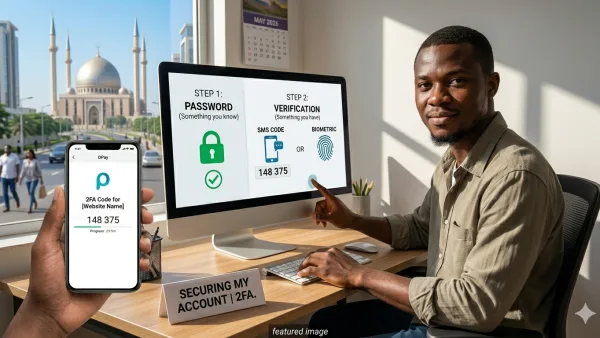
Enable multi-factor authentication on every account that holds personal or financial information. Enabling two-factor or multi-factor authentication can prevent 99 percent of account takeover attacks. Despite this, 81 percent of data breaches are attributed to weak or stolen passwords, and account takeover through credential compromise remains among the most common identity theft methods. MFA means that even if a thief obtains your password through a data breach or phishing attack, they cannot access your account without the second factor — a code generated by an authentication app, a physical security key, or a biometric confirmation on a trusted device. SMS-based codes are better than nothing but are vulnerable to SIM-swapping attacks; authentication app codes or hardware security keys provide meaningfully stronger protection for high-value accounts like banking, email, and brokerage accounts.
Use a password manager and enforce unique, complex passwords for every account. Forty-six percent of Americans prefer passwords that are easier to remember even at the cost of security. Credential stuffing — the automated testing of username and password combinations stolen from one breach against hundreds of other services — is highly effective precisely because password reuse is so common. If a password from a data breach at any service you have used appears in a criminal’s database, that same password may unlock your bank, your email, your healthcare portal, and your investment accounts. A password manager generates and stores unique, complex passwords for every account, requiring you to remember only the single master password for the manager itself. It is the most practical solution to the password reuse problem that affects the majority of internet users, and it is available from reputable providers at low or no cost.
Monitor your credit reports and financial accounts continuously. The average time to identify a breach in the context of identity theft can extend to months or years when the victim is not actively monitoring for suspicious activity. Early detection is the difference between a fraud that is contained before significant damage is done and one that has metastasised across multiple accounts and institutions before the victim is aware anything is wrong. Annual free credit reports from all three bureaus — available through AnnualCreditReport.com — are the legal minimum. In 2026, continuous credit monitoring through a reputable service or through the free monitoring features offered by many financial institutions and credit card providers is the appropriate standard. Setting up transaction alerts on all financial accounts means that any unauthorised charge triggers an immediate notification rather than being discovered on a monthly statement review.
Check whether your data has been exposed in breaches and monitor dark web exposure. Services including Have I Been Pwned allow anyone to check whether their email address has appeared in known data breaches — providing a specific, actionable signal about whether credentials associated with that address need to be changed. More comprehensive dark web monitoring — offered by identity protection services as a paid feature — continuously scans criminal marketplaces and data dumps for your SSN, email addresses, phone numbers, and financial account numbers, alerting you when your information appears for sale. Given that the cumulative effect of years of large-scale data breaches has exposed the personal information of the majority of adults, the question for most people is not whether their data is on the dark web but how extensively it is exposed and whether credentials associated with active accounts need rotation.
Remove your personal information from data broker databases. Data brokers legally aggregate and sell detailed personal profiles that are actively used by criminals to build targeted attack intelligence, flesh out synthetic identities, and make social engineering attempts convincing. Removing your information from data broker databases interrupts this pipeline at a point upstream of the attack itself. Manual removal requires submitting opt-out requests individually to hundreds of brokers — a process that takes many hours and must be repeated because brokers re-aggregate data continuously. Automated data broker removal services handle this process on an ongoing basis, continuously re-submitting removal requests as data is re-added. This is a protection specifically calibrated to the 2026 threat environment, where AI tools consume data broker listings to generate the personalised attack profiles that make AI-powered phishing and social engineering so effective.
Apply rigorous social media hygiene. The personal information most useful for social engineering — birthday, family members’ names, employer, schools attended, current and former cities, physical appearance, social circle, regular locations — is largely what people voluntarily share on social media. Auditing social media privacy settings to restrict profile visibility, removing or not posting information that answers common security questions, and being thoughtful about what is shared publicly does not require abandoning social media. It requires recognising that the audience for that content may include criminal actors harvesting profile data systematically, and calibrating what is shared accordingly. The combination of data broker exposure and social media oversharing creates the detailed personal profiles that make targeted identity theft attacks possible — reducing one reduces the utility of the other.
Secure your physical mail and documents. Mail theft is a persistent source of identity information that predates digital attacks and continues alongside them. Locking your mailbox, using USPS Informed Delivery to see what mail is expected before it arrives and to flag anything that does not appear, and opting for electronic statements for financial accounts reduces the attack surface available to physical mail theft. Documents containing SSNs, account numbers, and other sensitive information should be shredded rather than discarded whole. Going paperless for financial statements, tax documents, and healthcare records eliminates the physical exposure pathway while also improving access to the monitoring history that helps detect fraud early.
Build verification habits that block AI-enabled social engineering. In the 2026 environment of AI-cloned voices and real-time deepfake video, the verification reflex — establishing through a separate, pre-agreed channel that a communication is genuine before acting on it — is the procedural defence that blocks attacks that technology cannot reliably detect. When you receive an unexpected call, video call, or message requesting financial action, urgent personal information, or unusual authorisation, the appropriate response is to end that communication and initiate contact through a known, independently verified channel. Call the institution back on the number from their official website, not the number provided in the suspicious communication. Require that financial transfers above a defined threshold be confirmed through a separate channel and with a second person. A code word agreed in advance with family members — verifiable in a call that appears to come from a family member in distress — breaks the deepfake’s most powerful tool, which is the victim’s instinct to trust a voice they recognise. This verification habit costs nothing. It is simply a decision to treat the source of unexpected urgent communications as unverified until a separate verification confirms it.
Consider a comprehensive identity protection service for monitoring, alerts, and recovery support. The identity protection services market was valued at $12.5 billion in 2023 and is projected to reach $34.7 billion by 2032, reflecting growing recognition that the monitoring and recovery infrastructure these services provide addresses real needs that free individual measures do not fully cover. A comprehensive identity protection service combines credit monitoring across all three bureaus, dark web monitoring, data broker removal, SSN monitoring, financial account monitoring, and identity theft insurance — typically $1 million or more — with access to recovery specialists who manage the dispute, notification, and legal process if theft occurs. The insurance component matters because the average cost of professional identity theft recovery assistance, combined with the financial losses that may not be immediately recoverable, can exceed what most individuals can absorb without support. The best services add value primarily through the time and expertise invested in recovery when something goes wrong, not merely through the monitoring that detects it.
If Your Identity Is Stolen: What to Do and in What Order
Discovery that your identity has been stolen is disorienting, and the instinct to panic or to start making calls without a plan can compound the damage. A structured response sequence significantly improves outcomes.
The immediate priority is containment. If you have discovered fraudulent accounts or transactions, contact the relevant institutions immediately to flag the fraud and freeze any accounts that may be compromised. Change passwords on any accounts that share credentials with affected systems. If you have not already placed a credit freeze, do so immediately at all three bureaus — this prevents additional new accounts from being opened while the fraud is being resolved.
Report the fraud to the FTC at IdentityTheft.gov. The FTC’s identity theft portal generates a personalised recovery plan, a pre-filled FTC Identity Theft Report that is accepted by most creditors and credit bureaus as evidence of fraud, and step-by-step guidance for the specific type of identity theft experienced. Filing a police report with your local law enforcement provides an additional document that may be required by some creditors. For tax identity theft, report directly to the IRS Identity Theft Central and request an Identity Protection PIN, which prevents anyone from filing a return in your name in future years.
Dispute fraudulent accounts and transactions with the credit bureaus and creditors. Each credit bureau has a fraud dispute process. Placing a fraud alert — which requires creditors to take additional verification steps before opening new accounts — at one bureau triggers notification to the other two. A fraud alert lasts one year and can be renewed. An extended fraud alert, available to confirmed identity theft victims, lasts seven years. Write to each creditor that has a fraudulent account, including the FTC Identity Theft Report and a written explanation, requesting that the fraudulent account be closed and the credit inquiry removed. Document every contact — the date, the person spoken to, the outcome — in a log that provides the paper trail for disputes and potential legal action.
Continue monitoring throughout the recovery period and beyond. Identity theft does not end with the closure of the fraudulent accounts that have been identified. Thieves who possess your personal information may attempt to use it again months or years later, or may sell it to other criminal actors. The recovery period is not a defined endpoint after which monitoring can be reduced — it is the transition to a permanently heightened level of ongoing vigilance.
The Road Ahead: Identity Theft in the Years Beyond 2026
The trajectory of identity theft is not encouraging in its near-term direction. Generative AI continues to advance, making deepfakes more realistic, personalised phishing more convincing, and synthetic identity construction more automated. The data broker ecosystem continues to expand. Data breaches continue to expose billions of records annually, continuously replenishing the criminal databases that fuel fraud operations. The global cost of identity fraud exceeded $50 billion in 2025, and every structural factor points toward continued growth.
The regulatory response is also developing, if more slowly than the threat. The EU’s PSD3 and Payment Services Regulation will introduce stricter requirements around fraud prevention, customer authentication, and incident reporting. Age verification mandates in the UK, Australia, and other jurisdictions, while primarily aimed at protecting minors, are accelerating the development and adoption of identity verification infrastructure that has broader fraud prevention applications. Biometric authentication — which binds identity to physical characteristics rather than to tokens and passwords that can be stolen — is growing in adoption, though the trust ecosystem around biometric data storage and privacy remains unsettled.
AI-driven fraud detection — the defensive application of the same machine learning tools that attackers are weaponising — is demonstrably effective. AI-driven fraud detection has helped businesses reduce fraud instances by approximately 30 percent. Behavioural biometrics, which identifies users by patterns in how they type, move their mouse, and navigate interfaces rather than by What They know or possess, is increasingly deployed by financial institutions as a passive layer of continuous authentication that is difficult for even AI-powered attackers to replicate convincingly. The arms race between AI-enabled fraud and AI-enabled fraud detection will define the identity security landscape for the remainder of this decade.
For individuals, the forward path is the same as the present path: the protections that work now will continue to work, and the habits of verification, monitoring, and information minimisation that interrupt the fraud pipeline at its source are not going to become less relevant as the attacks become more sophisticated. The credit freeze that prevents new account fraud works regardless of how convincing the deepfake or how sophisticated the synthetic identity. The verification reflex that requires confirmation through a separate channel before authorising an urgent financial request works regardless of how perfect the voice clone. The password manager that ensures unique credentials across every account works regardless of how large the breach that exposes credentials from a single service.
Identity theft has become one of the defining crimes of the digital age — not because the concept is new, but because the technology has enabled it to scale to a level of frequency, impact, and sophistication that no previous era has seen. The response it requires is proportionate: not paranoia, but consistent, informed, systematic protection of the personal information and accounts that constitute your digital identity. Every 22 seconds, someone in America discovers the cost of not having had those protections in place. The most effective moment to implement them is not after that discovery — it is now.


0 Comments
No comments yet. Be the first to share your thoughts!